

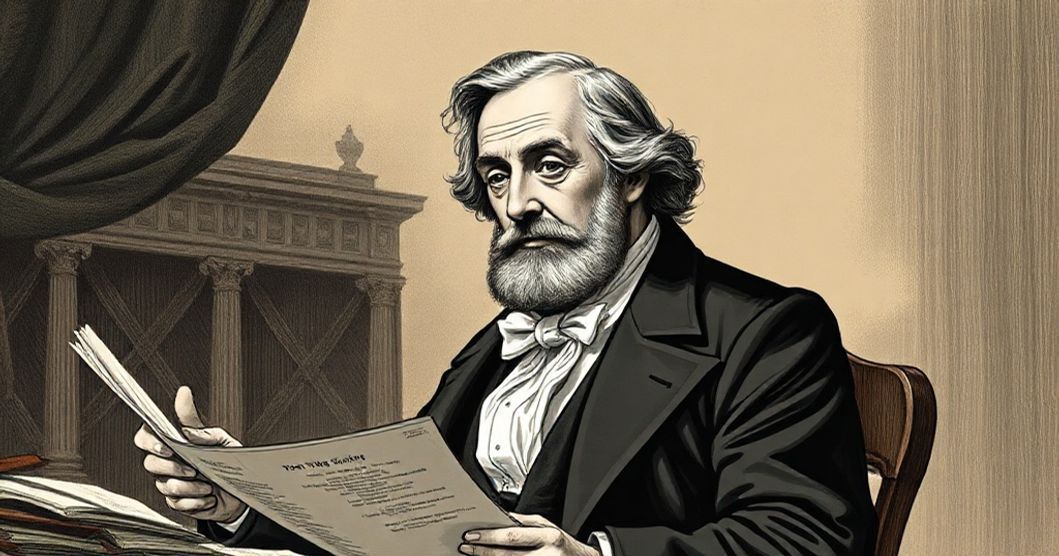
The observations that Prime Minister Narendra Modi made on 19th-century British lawmaker, Thomas Babington Macaulay, while delivering the sixth Ramnath Goenka Lecture recently has triggered a wide variety of commentary. Modi had said that Macaulay’s 1835 Minute on Education, which led to the push for English education in India by the British administration, had created a mindset of cultural “slavery”. He also spoke about how it uprooted India from its cultural foundations, and broke its “self-confidence and instilled a sense of inferiority.
” Advertisement At a time when India’s bullish economic performance, its rich human resource, and promise of even greater prosperity have been linked, globally, to English, Modi’s remarks have somewhat surprised people. The world thinks India’s accidental encounter with English in the 19th century actually propelled the nation into charmed destinies.
But, in the course of the same lecture, Modi clarified that his government was not opposed to the English language but “firmly supports Indian languages”. This may sound like a small concession to many, but Modi had three nations as his reference points — Japan, South Korea and China. He said, “they adopted many Western practices but never compromised on their native languages.
” This nudges one to wonder if India’s evolution would have been different had its history been different. But since the past cannot be altered, this question can at best remain a big “what if” of Indian history.
One has to admit that it is always the “what ifs” of history that influence politics and nationalism, not so much the real happenings. Advertisement Also, the histories of the three nations Modi named have independently been very different from that of India, and the management of their linguistic and cultural heritage has seen many pleasant and terribly unpleasant trajectories.
Therefore, as examples, they do not stand as absolute. Also Read | Census is about who we are. It cannot ignore caste and migration The arguments about English were never binary or flat during the freedom movement, nor after Independence.
Ideas of democracy, liberalism and the modern nation itself largely travelled through the English language and mingled with the regional languages to create an unexpected renaissance in every corner. Even more important is the fact that English has, at crucial junctures, taken the pressure off our intensely diverse nation, especially when sub-nationalisms and caste divisions have threatened its integrity. For long, federalism has made English its ally too, and in a linguistic Babel like India, it has been perceived as a less chaotic route to a more perfect union.
Whenever the south of India has resisted “Hindi imperialism”, English has presented itself as a democratic equaliser, and made communication possible between irreconcilable cultural and linguistic landscapes. Similarly, the most oppressed in India have seen English as a vehicle of deliverance from caste-based iniquities. B R Ambedkar himself made this very clear, and dressed in a suit at all times when Congressmen were throwing their western garments into a bonfire.
Regional Indian languages are very rich no doubt, but for Dalits they carry the registers of caste hierarchy, which English does not. Even back in Macaulay’s time, the introduction of English was not an easy decision.
Not because Indians resisted it at the time; it was the British Orientalists who clashed with Anglicists like Macaulay, and the then Governor-General of India Lord William Bentinck. While neither Anglicists nor Orientalists had qualms about the colonial or imperial project, their clash was over strategy, on how best to get through to the Indian masses and stabilise their administrative grip.
Macaulay’s brilliant biographer, Zareer Masani, wrote how philosopher and political economist, John Stuart Mill, fully backed by the directors of the East India Company (India was still not directly under the British crown in 1835), wrote to the imperial government condemning the new policy because, “it was likely to provoke hostility from Indians who saw the promotion of English as a threat to their religions. ” Mill had argued that even those Indians who embraced the new learning, “would acquire only a smattering of English, sufficient to get them government jobs.
” He insisted that people learned best in their mother tongues: “Indian vernaculars needed to expand their vocabulary by drawing on their classical roots in Sanskrit and Arabic. It was, therefore, the Orientalists, not Anglicists, who would best diffuse knowledge down to the Indian masses; and public money should not be wasted teaching elementary English to Indians who could pay for it themselves,” Masani wrote, paraphrasing Mill’s argument.
But Macaulay had insisted that the “stir in the native mind” to get English education was “certainly very great”. If one looks at the history of Macaulay’s Minute, and its later adoption as policy, it is clear that even before the arrival of Macaulay in India, Lord Bentinck had in 1834, as a law member of the Governor-General’s council, somewhat linked English education with social reform, and had established ties with radical Indian reformers like Raja Ram Mohan Roy.
English education in colonial India was first thought of as a tool for Evangelical Christianity, but it slowly wore the garb of “liberal imperialism” in the hands of Macaulay, who was a Whig party parliamentarian before he came to India. To be fair to Macaulay, he visualised English education as fulfilling an egalitarian cause.
He was far more inclusive in his vision, Masani argued, citing his parliamentary papers: “His ultimate goal was an Indian empire whose citizens, like those of Rome, would become equal partners of their British mentors…” Macaulay had little sympathy for Evangelical Christianity, and the “imperial proselytising he had in mind was essentially secular, cultural and political,” Masani wrote. It is important to note that by the time Macaulay came to India, the Bengali renaissance had already begun. The Brahmo Samaj had embarked on a project to reconcile European Enlightenment ideas with the spirit of the Upanishads.
There was an attempt to blend the East and the West to arrive at a new progressive cultural formulation. The Calcutta Hindu College, founded in 1817, had already started teaching English and European science and literature.
In fact, around the time, Raja Ram Mohan Roy had strongly opposed a new Sanskrit college in Calcutta on the grounds that it would perpetuate “ignorance rather than knowledge. ” Before Macaulay reached Calcutta to be on the Governor-General’s council, two encounters he had in Madras and Mysore with pensioned royalty immensely contributed to his English education mission.
On the Madras Nabob, he wrote: “If the Nabob had been so brought up as to turn out an accomplished gentleman… he would have been the most useful agent that our government could have had in the great work of civilising the Carnatic. ” On the Wodeyar king in Mysore, Macaulay observed: “To give a person immense power, to place him in the midst of the strongest temptation, to neglect his education, and then degrade him from his high station because he has not been found equal to the duties of it, seems to me to be a most absurd and cruel policy… Whatever power I have shall be exerted to prevent the repetition of such fatal errors in future.
” Out of such exposure, inferences and ideological concern was born the Minute, which altered history for sure. It did not, however, sink India nor did it snuff out its culture. English remained the cultivation of the elite for the longest period, as it does even now.
As Macaulay intended, it only created another class of Indians. Srinivasaraju is the author, most recently, of The Conscience Network: A Chronicle of Resistance to a Dictatorship.